
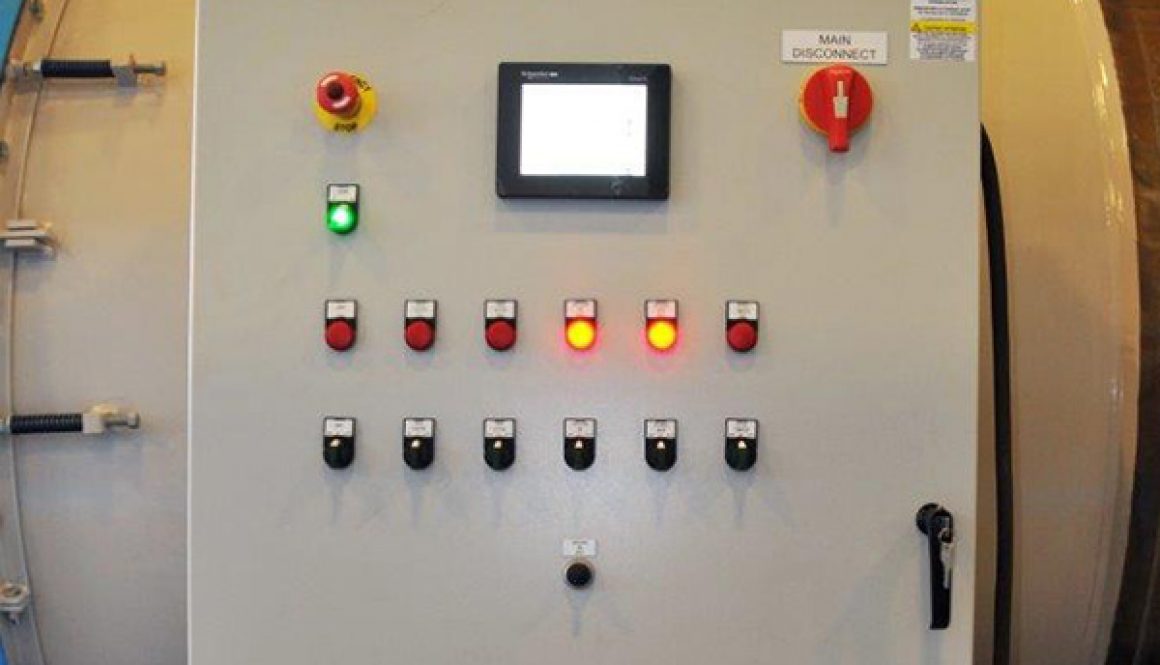
Gas price increases, according to industry analysts, are here to stay, and will affect every aspect of your business–especially waste management costs.
When you are thinking about how to mitigate these cost increases, please consider the BioReactor by XACT as your solid organic waste solution. The enclosed rotating drum BioReactor Composting System….
…does not use gas or diesel fuel (imagine no fuel bill at all)!
…runs on electricity with extremely low energy consumption.
…is advanced composting technology which allows for composting on site (thus eliminating haulage fees and tipping fees).
…is available in sizes small enough to suit a commercial plants, universities, hospitals, schools, grocery stores, resorts, hotels, zoos, entertainment facilities and much more.
…is also available in sizes large enough for organic waste diversion programs from landfills on the scale of municipalities, food processing plants, agricultural operations, and biosolids from waste water treatment facilities.
…has proven over and over again to be the best business decision you can make in terms of organic waste management.
….pencils the best of all the composting methods available today when you consider and calculate what are the total costs versus how much money you can save and make!
…the shortest time frame for Return on Investment…in other words, the BioReactor will have paid for itself long before other technologies including windrow operations.
Contact us anytime to find out how the XACT BioReactor can help you reduce your fuel bill and at the same time increase your revenue.
Its easier than you think, so let’s get started.
Many thanks. D
XACT Systems’ BioReactor has been selected by COMPOSTAmex of Mexico to provide in-vessel, rotating drum composting solutions for their world renown clients.
COMPOSTAmex has over 12 years of successful experience in providing traditional composting equipment and guidance for solid organic waste conversion. Recently, just as in other regions, COMPOSTAmex has recognized that some situations require faster processing in tightly confined spaces, yet still producing excellent quality compost. Enter the BioReactor….which does all of this and more! Armed with the BioReactor, COMPOSTAmex has broadened its opportunities to include a variety of manufacturing operations such as auto plant facilities, tequila manufacturers, resorts, computer companies, food production plants and so on. Food waste, cafeteria waste, processing waste and other organic materials commonly found on such sites will be “grist for the mill” (feedstocks). We are honored to have been chosen by COMPOSTAmex and look forward to serving them and their clients. Gracias!
Why Bury Money? Why indeed! But it is occurring everyday in every municipality on this continent. At a time, when city coffers are dry and nobody wants to raise taxes, a good source of new revenue is being sent to the landfill and being buried. Solid organic waste when converted to good quality compost is worth $16.00 to $65.00 a cubic yard. Imagine what the annual revenue stream could be on the thousands of tons of organics if only it were diverted. Then imagine what could be done with the money.
I can hear the nay-sayers now…..”but the cost of setting up the composting system is prohibitive.” As the old timers used to say, hog wash! The XACT BioReactor Composting System pencils so well because of its low operating costs, minimal manpower, land, and energy requirements. The typical Return on Investment for a large system is 2 years or less. Plus, it is clean system with ridiculously low odor, emissions or leachates. The precise engineering and robust carbon steel construction of the BioReactor provides reliable 24/7 operation. Check out the website: xactsystemscomposting.com and read about the success stories of others who have stopped burying their money (and are spending it!!!)
Christina and Jeremiah Eneix of Green Earth Landworks in Anchorage Alaska purchases the compost produced by the XACT BioReactor which is owned and operated by Alaska Green Waste Solutions. The compost is produced using food waste, horse manure and wood chips.
When Green Earth Landworks receives the compost, it is cured in static piles, and, due to the severity of the weather conditions, the piles are inoculated with a microbial package to enhance the final maturation of the compost. The mature compost is blended with top soil for bulk sales at the nursery. It is also used for top dressing, erosion control socks filler. These socks are used by the DOT which requires the compost be certified. The lab reports show that the compost passes all the tests with flying colors! Please get in touch if you would like a copy of the report!
Back in 2009, Alaska Waste Company had wanted to divert 450 to 500 tons of organic materials from the landfill and looked at the possibility of windrow and static pile composting. However, the company did not have the space for these methods and the throughput would be too slow anyway. Then Alaska Waste investigated in-vessel composting methods and came upon the rotating drum BioReactor technology by XACT Systems. The BioReactor has a tiny footprint and tremendous throughput capacity. It was a good fit for Alaska Waste’s needs, so they purchased a 10’ diameter by 30’ long vessel.
Once all the installation and recipe tweeking had taken place, the system nearly runs itself. There is only one operator who works a total of 3 to 4 hours a day with the entire composting system (including loading, unloading and clean up). There is minimal maintenance, and the energy requirements are so low because the 10’ x 30’ drum is being driven by only a 5 hp motor. As an added bonus, the heat off the BioReactor helps heat the building!
Jeff Jessen, the Renewable Resources Program Administrator, says, “the XACT composting system runs on Cruise Control now…it runs so well and it couldn’t be easier to operate.”
Alaska Green Waste Solutions sells the compost to a local nursery for $50.00 a cubic yard. The nursery cures it for a couple of weeks, blends it and uses it for landscaping at housing projects, erosion control for large projects, and as a medium for compost socks. “They cannot get enough of our compost” Jeff reports.
Urban composting with the BioReactor by XACT offers savvy businesses the opportunity to capitalize on the growing trend for local food production better know as Urban Farming. Let’s talk about this new Local Food Movement and then see how the BioReactor fits into the picture.
A new study from The Ohio State University suggests that most modern cities have the potential to grow up to 100 percent of their current needs for produce and other items. The study, “Can cities become self-reliant in food?,” conducted by Parwinder Grewal, professor of entomology and director of the Center for Urban Environment and Economic Development at Ohio State University, suggests that a city such as Cleveland, OH, could produce most of the food its citizens need.
The report states that “While not trivial, current local food production only accounts for 1.7 percent ($1.5 million) of the $89 million Cleveland spends annually on fresh produce, and 0.1 percent of the city’s total food and beverage expenditures. However, the potential for food self-reliance is significantly higher considering available space in the city.”
The study determined that Cleveland has more than 3,000 acres of vacant lots that are the result of years of manufacturing job losses, the recent economic downturn and a high rate of home foreclosures. He also found 2,900 acres of flat rooftops.
This study indicates that “the city can prevent economic leakage anywhere from $27 million to $115 million annually by increasing its production of fresh produce, poultry and honey. This could boost the city’s economy and lead to increased job creation.” In addition, local food production has many other benefits, such as boosting access to and consumption of fresh fruits and vegetables; cut obesity rates due to consumption of healthy food and increased physical activity; promote a sense of community and decrease crime activity; and raise property values as vacant lots are put to attractive and productive use.
Urban farming can also reduce human impact on the environment. Professor Grewal said food in the U.S. travels an average of 1,500 miles from the farm to the consumer’s plate, requiring large amounts of fuel and energy for transportation and refrigeration. Additionally, increasing green space in the city through farms and gardens can boost carbon storage in the soil, reduce problems associated with stormwater runoff, and curtail the urban heat island effect.
“Just like the organic food movement, where it was about five to six years ago, the local food movement is gaining a similar type of momentum right now, and every city has the potential to at least increase its local self-sufficiency and resilience by producing its own food.”
This study certainly makes sense, and the BioReactor Mini, such as the 510 or 515 makes it a viable economic and environmental business endeavor. All the features of the XACT BioReactor scream “Urban”. From the fast throughput to the quiet operation to the odorless processing there is no better composting system for organic waste conversion. Couple the BioReactor technology with the staggering food waste produced from schools, restaurants, hospitals, and grocery stores and then utilize the finished compost for Urban Farm–it makes cents (lots of them)!
Compact BioReactors like this one can have a big impact on a school’s organic waste management challenges. It has fast throughput, produces stable compost in 4 to 7 days, produces no odors or emissions. It is suitable for situations where 1 to 4 cubic yards of waste need to be processed daily. This BioReactor has a friction drive and it is powered by a 1.5 hp motor.
This technology is ideal for schools or universities. If you are concerned about teaching good environmental values and indeed acting in an environmentally responsible way, then the BioReactor could be just what you need. Why not consider this unit for a pilot project. As you can see, the footprint required is pint sized, and it is easy to use, clean and quiet to operate, and controls odors. The opportunity to save hauling costs and enhance your “Green” image is available now…so why not find out a more. It would be my pleasure to help answer any questions about how the BioReactor can enhance your leadership in the community and commitment to the environment.
Are you frustrated with the tremendous amount of organic waste created in our communities along with the persistent total lack of creativity in ways of disposing of it? Perhaps the answer to this problem can be found in the wisdom of 2 ideas. 1) Think Globally, Act Locally. 2) Grassroots Action. At XACT Systems, where I work, we offer a composting system that will allow you to take action now with an environmentally and economically viable system – on a extremely small footprint – handling the amount of waste per day that you need to – odor control up the wazoo – within the confines of your community. At the core of the system is the BioReactor which converts organic waste into compost NOW. Your concern is our concern and that is why the XACT BioReactor was created….to be part of the solution. I would be very grateful, if you would take a look at this system when you get a free minute. Many thanks. D
A composting facility design using 4 XACT BioReactors accommodates 2 different waste streams. In this situation, the waste streams are biosolids and mixed solid organics. Note the building in the foreground which has a wall dividing the tipping floor which keeps the waste streams separate. The 2 vessels on the left compost one type of waste while the 2 on the right compost the other waste stream. In this case, the discharged compost needed to stored for a period of time so it is automatically conveyed into the building in the background for that purpose. One of the requirements of this facility being built is this jurisdiction was that there be odor control technology included. Therefore there are 2 biofilters: one services the waste receiving building and the other services all the drums. If you are thinking about how to design your composting facility, please give us a call. The design possibilities know no limits. Thanks so much for your time and consideration. Doreen
Many communities have set higher standards for waste diversion, yet have not achieved them for one reason or another. What is the target for your community to divert solid organic waste from landfills? Is there progress being made towards meeting those goals? If not, what or who are the obstacles standing in the way?
Composting projects should be getting quicker approvals than they are . How can we move these projects forward?
Many thanks, and keep in touch. D